· By the MobiPOS team at HixCode
How to Reduce Installment Payment Defaults: 9 Practical Steps for Shops
If your shop sells on installment, some customers will pay late and a few will stop paying altogether. You can't bring that to zero, but most shops can cut it sharply with better rules at the point of sale and a steady recovery routine afterwards. These are the practical steps that make the biggest difference.
Before the sale: prevent the default
1. Ask for a meaningful down payment
A customer who has paid a real share of the price up front is far more likely to finish the plan, and if they don't, your loss is smaller. Set a minimum and raise it for new customers, high-value items or long terms.
2. Keep terms short on items that lose value fast
Phones and laptops lose resale value quickly. If a customer is still paying for a phone that is now worth less than the remaining balance, the temptation to stop paying grows. Match the term to the item: shorter for phones, longer only for items that hold their value.
3. Verify identity and record a guarantor
Record the customer's government ID, phone number and address, and a guarantor's name, phone and ID. Call both numbers at the counter to confirm they work. A guarantor who knows they may be contacted is one of the strongest reasons customers keep paying.
4. Start new customers small
Let first-time customers prove themselves on a smaller item or a larger down payment. Customers who complete one plan on time are your safest future plans.
5. Explain the plan clearly — and put it in writing
Give the customer an invoice that shows every due date and amount. Many defaults start with a genuine misunderstanding about when payments are due. Agree on what happens if a payment is late, at the time of sale.
After the sale: catch problems early
6. Check the due and overdue list every day
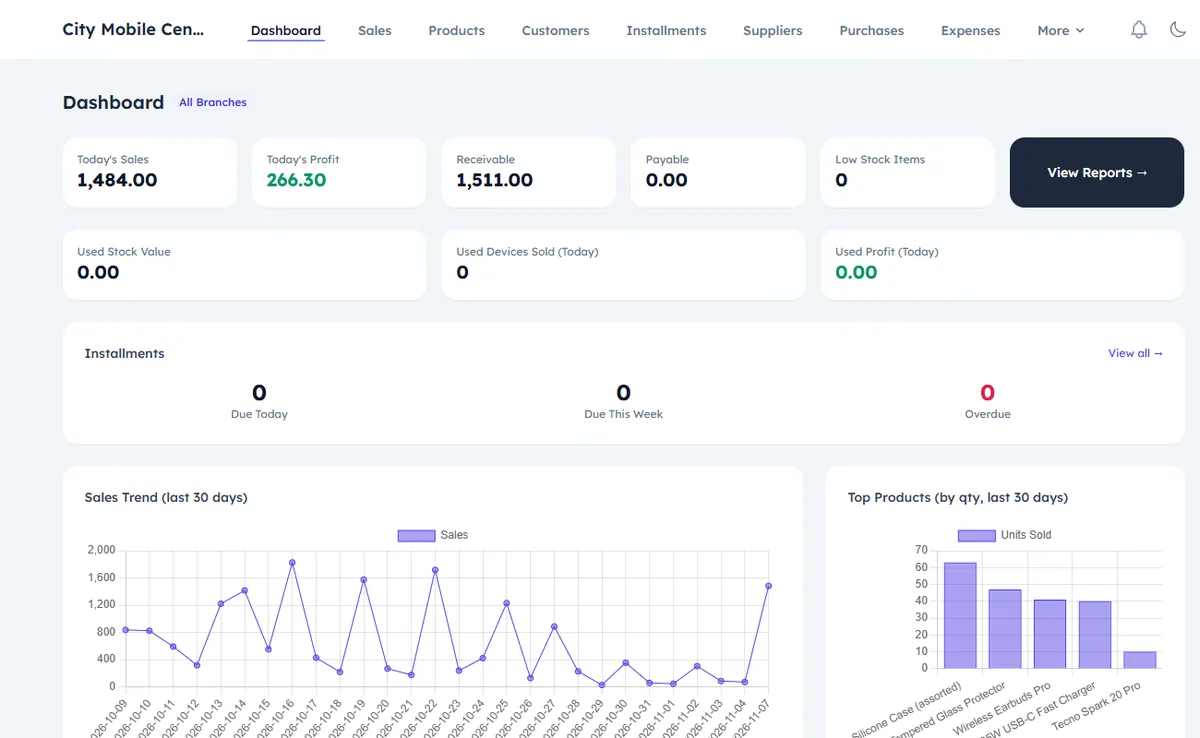
The single most effective habit is looking, every morning, at who is due today and who is overdue — sorted, with their phone numbers. Shops that only check balances at month end discover problems when they're already weeks old.
7. Remind before the due date
A short, friendly message a day or two before a payment is due prevents a lot of "I forgot". Keep the tone polite — most late customers intend to pay.
8. Escalate on a fixed timeline
Decide your steps in advance and follow them for everyone, for example:
- 1–3 days late: a reminder call or message to the customer.
- About a week late: a second call, and a call to the guarantor.
- Several weeks late: ask the customer and guarantor to come to the shop and agree a catch-up arrangement.
Being consistent is fairer to customers and avoids the "they let my friend pay late" problem. Always follow the debt-collection rules that apply where you operate.
9. Accept partial payments — and record them properly
A customer who can pay half today is better than one who pays nothing and stops answering. Record partial payments against the right installment so the balance stays accurate and the shortfall carries forward.
Measure it
Track the share of your installment balance that is overdue each week. If it rises, tighten your rules at the point of sale — larger down payments, shorter terms, stricter guarantors — rather than relying only on harder collection.
Tools that help
MobiPOS by HixCode builds the payment schedule at checkout, stores guarantor details on the sale, shows due-today and overdue lists, and applies partial and early payments correctly. It is free for lifetime in every country. If you are just starting, read how to offer installment plans in your shop first.
Frequently asked questions
What is the most effective way to reduce installment defaults?
Combine stricter rules at the point of sale (larger down payments, shorter terms, verified guarantors) with a daily routine of checking who is due and overdue and contacting them early.
When should a shop contact the guarantor?
Set a fixed rule and apply it to everyone; many shops call the guarantor when a payment is about a week late, before the debt grows.
Should a shop accept partial installment payments?
Usually yes. A partial payment keeps the customer engaged; record it against the correct installment so the shortfall carries forward and the balance stays accurate.
Is there free software that tracks overdue installments?
Yes. MobiPOS by HixCode is free for lifetime and shows installments due today, due this week and overdue, with payment history and guarantor details for each plan.